Honors Students Take a LEAP! Toward Their Future Careers
e.solisgarcia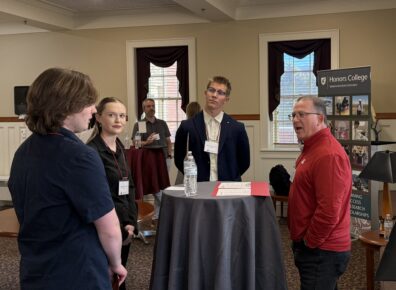
Honors Students Take a LEAP! Toward Their Future Careers
By Gary Hyatt, WSU Honors College, gary.hyatt1@wsu.edu
What does it take to feel confident walking up to an employer at a career fair and starting a conversation?
For Honors students, the answer was simple: practice.
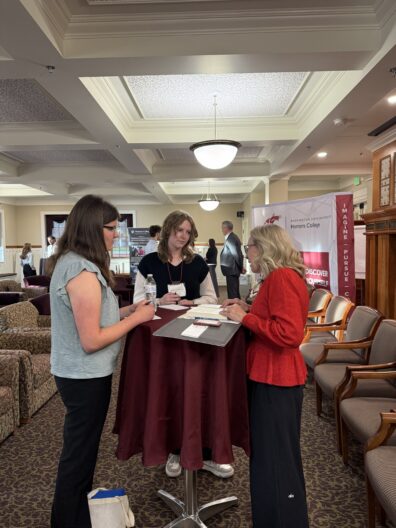
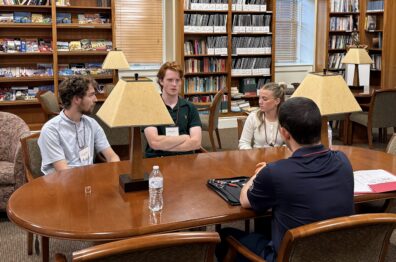
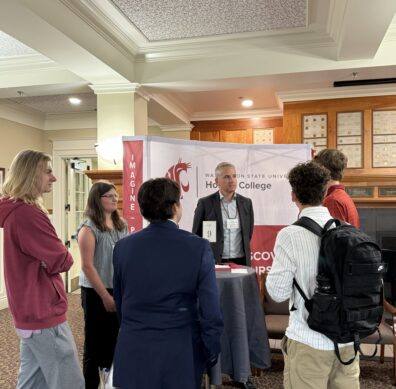
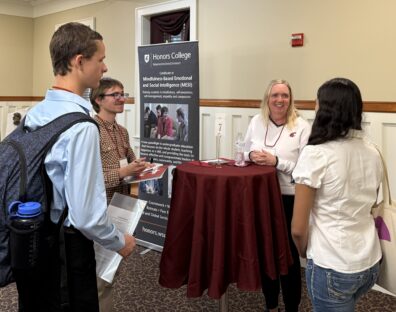
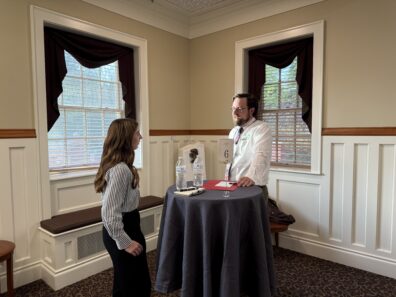
On October 1, the Honors College hosted LEAP!, an evening designed to help students build the professional networking skills they will need as they begin their careers. With the WSU Career Expo happening this week, the timing could not have been better.
Students spent the evening rotating through conversations with professionals from a wide range of industries, practicing introductions, elevator pitches, eye contact, asking questions and sharing their own experiences and goals. While the format was designed to feel a little like “speed dating,” the goal was serious: give students a safe place to practice before they walk into a room filled with potential employers.
We are incredibly grateful to the Honors Alums and professionals who gave their time and shared their experience with our students:
Linda Nihoul, Certified Financial Planner, Ameriprise Financial Services
Brady Cornelius, Commercial Real Estate Appraiser, Lembeck Appraisal & Consulting
Colin S. Campbell, Senior Research Scientist, President and CEO, METER Group
Marisa Hemingway, Senior Human Resources Manager, Schweitzer Engineering Labs
Grant Godfrey, Senior Human Resources Manager, Schweitzer Engineering Labs
Elijah Shoemake, Senior Engineer, Plug Power
Kim Hargraves, Principal Technical Program Manager, Microsoft
Tim Hargraves, Managing Director, Ernst & Young
Chris Malde, Private Wealth Investment Management Specialist, Merrill Lynch.
Their advice reinforced an important message for our students: your career path does not have to be perfectly mapped out. Be willing to say yes, take advantage of opportunities, build relationships, learn from others and remain open to where your experiences may lead.
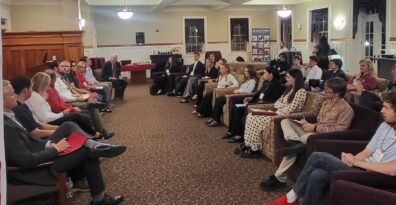
Dean Grant Norton served as the evening’s MC, helping guide the students and mentors through the rotations before bringing everyone together for a panel discussion and Q&A. The mentors shared career advice, observations from the evening and some of the lessons they have learned throughout their own professional journeys.
Most importantly, our students took the LEAP!
They stepped outside their comfort zones, introduced themselves to professionals they had never met and practiced telling their stories. Those conversations may help make the next handshake at the Career Expo a little easier and a little more confident.
Thank you to our mentors for investing your time and experience in the next generation of Cougs and thank you to our students for showing up ready to learn, participate and grow.
Go Cougs!