Honors Faculty Spotlight: Annie Lampman and the Launch of The Origin of Ava
By Gary Hyatt, WSU Honors College, gary.hyatt1@wsu.edu
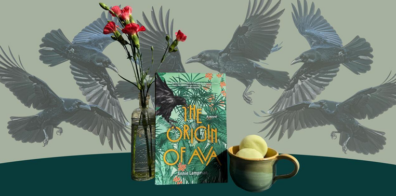 We are thrilled to celebrate the latest literary achievement of our own Honors Faculty member, Annie Lampman. Available now, Annie’s newest novel, The Origin of Ava, weaves together the lives of three unforgettable characters whose paths collide through fate, flight, and the healing power of nature. Drawing readers into the wilderness of Idaho and the lush landscapes of Ecuador, Annie explores themes of loss, renewal, and the profound connections between humans and the natural world.
A prolific writer, Annie is also the author of the award-winning Sins of the Bees and the poetry chapbook Burning Time, with her work appearing in over seventy literary journals and anthologies. She has been recognized with the American Fiction Award for Crime Thriller, the Dogwood Literary Award in Fiction, a Pushcart Prize special mention, and multiple Best American Essays “Notable” selections.
In this Q&A, Annie shares insights into her writing process, the inspiration behind The Origin of Ava, and how her passions for birdwatching, pollinator gardening, and restoration of historic homes influence her storytelling.
1. Congratulations on the release of The Origin of Ava! What first sparked the idea for this novel, and how did the story begin to take shape for you?
I grew up in Headquarters, ID spending my summers on the North Fork of the Clearwater River, and this book is essentially my love letter to that most sacred of family places, along with the high country that surrounds it. Perhaps the most important real-life event that formed The Origin of Ava was the Steep Corner Wildfire on August 12, 2012 that killed a 20-year-old female wildland firefighter. That day, my family and I were returning from a backpacking trip into Goat Lake, driving along the North Fork of the Clearwater River, when my wildland firefighter husband, Steve, and I spotted a huge mushroom cloud of wildfire smoke billowing ahead. We knew immediately it was bad, but then when one after another emergency vehicle passed us on the isolated backroad, lights and sirens blasting, we knew with sinking hearts it was worse than bad. At the time, we’d moved out of the Headquarters backwoods to the college town of Moscow, ID for my MFA in creative writing at the University of Idaho, and once we were home, we found out the firefighter who’d been killed was a Moscow local and a UI student, and the agency that had been in charge of the fire was my husband’s former employer. We, like everyone else, were devastated by the news. A few years later, two of our sons ended up working on the same wildland fire crew as the fallen firefighter and were tasked with establishing and upkeeping a woodland sanctuary dedicated to her. It was all very poignant, connected to our whole life in that place and its human/environmental experience, and it’s never left me, eventually turning into an award-winning short story (“Whom the Lion Seeks” Dogwood Fiction Award, judged by Phil Klay) and then into The Origin of Ava, serving as the hub around which the whole novel circles.
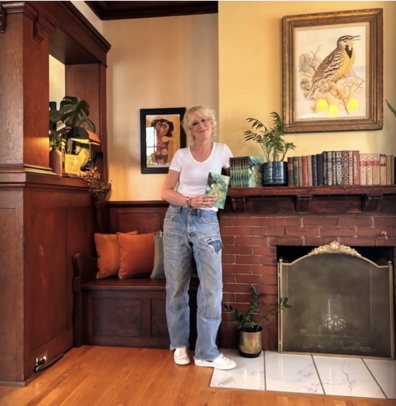
2. Nature and birds appear to play an important role in the book. How does your own interest in birdwatching and the natural world influence your storytelling?
Having grown up in a remote and forgotten place surrounded by uninhabited forest wilderness punctuated by lawlessness and constantly-looming human and environmental threat, I find myself always writing about settings where the natural world is a driving force, inhabiting the story as much as the characters, shaping the story’s emotional tenor, functioning as its beating heart. Remote settings and their related flora, fauna, and natural phenomena often demonstrate both intense beauty and intense hardship, highlighting everything in society over which I celebrate or despair. The places that inhabit my work have everything to do with who the characters are and what the characters do. I can’t even conceptualize a story without knowing, intimately and personally, its place of being so I typically write about places I know, places that I’ve experienced in some way personally. This is how the story of my characters arrives—their story in the midst of their place. Whether a micro focus or a macro focus, landscapes can inhabit the world of fiction in a way that not only enriches the story itself, but also readers’ experience of that story: its particular world, its characterizations, its emotions, and its movements both large and small. That’s what I strive for in my own work—nature/place functioning as a main force in and of itself, even as a kind of main character.
3. You’ve published poetry, essays, and another novel. How did writing a novel like The Origin of Ava challenge or stretch you as a writer compared to your previous work?
Each piece of writing poses its own unique challenge, whether a five-line poem, a ten-page personal essay, or a 300-page novel. As the latter, The Origin of Ava had two distinct challenges for me, the first of which was a writerly challenge I set for myself, had a lot of fun with, but often found really nettlesome: how to connect three disparate characters and their specific situations together into a satisfying whole—namely a disillusioned ornithologist professor moving from the Palouse to Ecuador; a backwoods Idaho runaway girl with pack llamas; and an ex-convict wildland firefighter jumping parole on a container ship. The second challenge was weaving in real-life stories and myth into this already stacked deck, such as the stories of 1800s miner Billie Rhodes, the Ridge Runner, Sacajawea, and my own personal family lore.
4. You teach in The Honors College at Washington State University. How has your experience working with Honors students influenced you as a writer or shaped the way you think about storytelling? In turn, how has writing a book while working at The Honors College made you a better teacher?
In the last decade working at the WSU Honors College, as a practicing writer (actively practicing the art you teach is always a big bonus as far as the lived experience informing the craft as well as the teaching of the craft!) I have honed my central narratives, come to understand my core concerns and conceits, and matured into my own writing style. Part of this is just the expected outcome and natural process for any artist after years of effort, but part of it is also directly related to teaching creative writing courses for Honors, particularly as connected to the MESI program (mindfulness-based emotional and social intelligence), and most particularly nature-based mindfulness. In encouraging my students to foster their own writing craft with joy, empathy, self-compassion, and a deep sensory observation of the natural (and human) world, I have better adopted the same strategies for myself and both my writing work and my teaching work have benefitted from it.
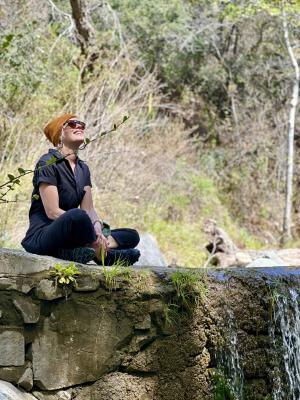
5. Parts of the novel are set in the Palouse and nearby Idaho. What makes this region such a compelling place to write about?
- I deeply know it, understand it, and love it—its flora, fauna, natural phenomena, histories, and dramas
- It is full of drama, from the prairie’s skies, fields, and winds to the mountain’s forests, peaks, and wild waters, not to mention all the human histories, both triumphant and tragic. There’s no end to the drama wherever you look, and as a novelist, drama is part and parcel of the gig!
To purchase Annie’s book click here- The Origin of Ava | torrey-house-press