Powering Her Future: Anneka’s Nuclear Path to the Navy
 By Gary Hyatt, WSU Honors College, gary.hyatt1@wsu.edu
Some students discover their future in a classroom. For Anneka Vossler, the spark came from a few chapters on nuclear chemistry and a stack of library books that were, by her own admission, a little over her head.
“I knew that I would understand everything in them someday,” says Anneka, a junior chemical engineering major from Hockinson, Washington.
That curiosity has taken her from exploring nuclear physics in high school to earning her Reactor Operator license at Washington State University. Now, she is preparing for a future in the U.S. Navy, where she hopes to make a difference in the lives of the men and women who serve our country.
From Library Books to the Reactor Room
When Anneka decided to attend WSU, she learned about the university’s research reactor. She knew right away that she wanted to get involved.
WSU offers undergraduate students the opportunity to pursue Reactor Operator (RO) and Senior Reactor Operator (SRO) licenses through a combination of academic coursework and hands-on training. For Anneka, that meant committing to a full year of classes while spending as much time as possible learning inside the nuclear facility.
Students study reactor fundamentals, learn the systems that keep the facility operating, conduct experiments, and develop the knowledge needed to operate the reactor safely. At the end of the training, Nuclear Regulatory Commission examiners put their knowledge to the test through a multi-day examination.
Anneka was among a select group of students to earn their Reactor Operator licenses this year.
“I am very excited and look forward to getting even more experience at the nuclear facility and train the next group of student trainees,” she says.
For someone who once checked out nuclear science books she could not fully understand, the achievement represents more than a license. It is another step toward turning a longstanding interest into a career.
When Honors Physics Meets the U.S. Navy
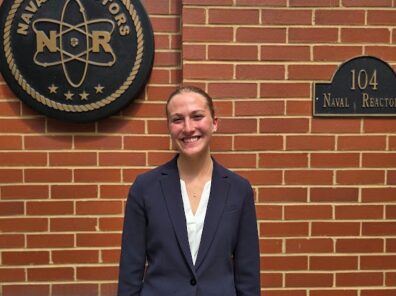
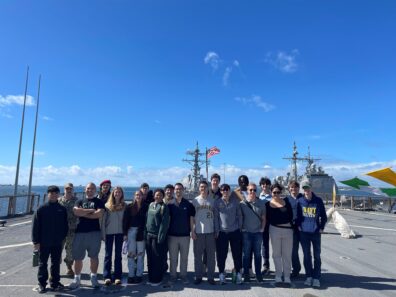 Anneka’s path toward naval service began while she was searching for internships. A U.S. Navy recruiter contacted her about a program for engineering students interested in nuclear power, leadership, and service.
Her academic performance, chemical engineering major, and involvement in The Honors College helped bring her to the Navy’s attention. Over the following months, she completed technical exams designed to test her problem-solving abilities and understanding of engineering and science concepts.
There was a catch: no notes, no formulas, and no calculators.
Fortunately, Anneka had a strong foundation to draw from. She credits Honors physics with Dr. Frederick Gittes for helping her prepare. Rather than simply memorizing information to pass an exam, she learned to develop a deeper understanding of physics and apply what she knew to unfamiliar problems.
That approach proved especially valuable during the Navy’s technical interviews, where she encountered questions similar to those she had worked through in class.
A Future Built Around Service
Anneka plans to graduate from WSU in May 2028 and then begin the Navy’s nuclear power training in Charleston, South Carolina. After completing that year of training, she expects to serve as a Navy officer and instructor, teaching future submarine officers as they prepare to join the fleet.
She anticipates spending four years in that instructional role, helping prepare the people who will operate and serve aboard the Navy’s submarines.
For Anneka, the opportunity is about more than applying her knowledge of nuclear power.
“My goal in the navy is to have a positive effect on the brave men and women who will be protecting us every day,” she says.
She describes herself as deeply honored to be an American and grateful for the opportunity to serve her country. While she has not yet decided what career might follow her time in the Navy, she is confident that the skills, experience, and connections she builds at WSU and through military service will open doors wherever she goes next.
Finding Community at a Big University
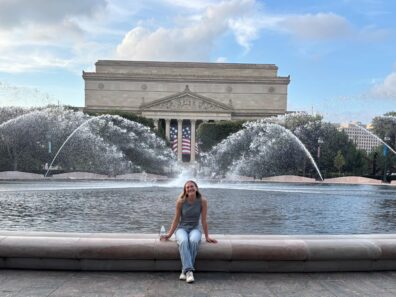 For all the complex science and big career plans, some of Anneka’s favorite Honors memories are refreshingly simple.
During her first week at WSU, she attended the Honors College ice cream social, where she met some of her best friends. That early connection helped her find a close-knit community within a large university.
She also appreciates the opportunity to step outside the technical focus of chemical engineering. Honors courses challenge her to use what she calls “the other half of my brain,” exposing her to different perspectives and helping her become a more well-rounded student.
She sees those experiences paying dividends well beyond graduation.
The Impact of Scholarship Support
Anneka’s WSU journey has also been made possible through scholarships, including multiple awards from The Honors College.
As a student supporting herself through college, that assistance has made a meaningful difference. Scholarship support has eased the financial pressure of tuition and other expenses, allowing her to focus more fully on her coursework, research opportunities, and campus involvement.
For Anneka, donor generosity means more than help with college expenses. It provides the freedom to pursue opportunities that build toward her future.
“Because of others generosity, I can fully dedicate myself to my engineering courses, engage deeply in my Honors classes, and prepare for a career where I hope to pay this kindness forward and make a meaningful difference in the world,” she says.
Looking Ahead
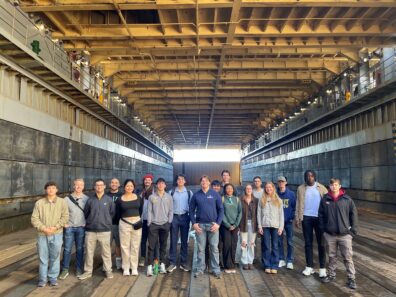 From those early library books to the WSU reactor and her future in the Navy, Anneka has followed her curiosity wherever it leads. She has embraced challenging opportunities, found a community that supports her growth, and began preparing for a career grounded in both technical expertise and service.
Her story also highlights what can happen when talented students have access to the right opportunities and the financial support to pursue them.
Anneka still has plenty to learn, including the next generation of student reactor operators she hopes to help train. But one thing is clear: the student who once believed she would someday understand those nuclear science books is already putting that curiosity to work.
And her next mission is just beginning.